GE VERNOVA | INDUSTRIAL ROUTER (SINGLE & DUAL WAN RADIO) | MDS ORBIT MCR & ECR
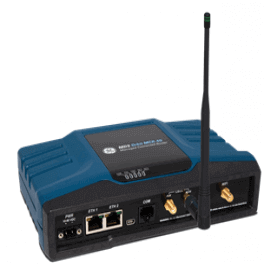
MDS™ Orbit is offered in three different packaging options. The ECR (Edge-Connect Router), is the most compact of the options, tailored for installations with limited space. The MCR (Multiservice-Connect Router) provides an industry unique advantage of dual radio uplinks which help reduce network downtime with capabilities such as signal quality based smart auto failover and other redundancy features. Customer hybrid communications networks are supported with popular use cases such as licensed narrowband and LTE connectivity in one solution. The Orbit OCR (Outdoor-Connect Router) is designed to provide security and strength in harsh weather environments.
Key Features
Orbit units include the following key features:- Security—The unit uses industry-leading security features to protect data while maintaining compatibility with deployed infrastructures. Features include FIPS 140-2 certified mode, AAA user access with passwords and lockout protection, VPN (IPSec), signed firmware, secure booting, integrity management and more. NOTE The Orbit device is designed for high security environments. As such, management of the device does not support Telnet, but instead implements the more secure SSH protocol.
- Small Form Factor—The unit is housed in a rugged enclosure suited for operation in harsh industrial environments. It requires only protection from direct exposure to the weather and may be easily mounted inside a NEMA enclosure for outdoor applications when required.
- Network Interfaces—Several network interfaces are present to provide connectivity for a variety of equipment and applications. Ethernet, SFP, serial and WiFi interfaces provide local connections while a cellular interface provides access to public carrier networks.
- User Interface—Multiple user interfaces are provided for configuration and monitoring of the unit. These include local serial console, web, SSH and USB. NOTE For units certified and installed in hazardous locations, use only the serial, Ethernet, or SFP connections on the unit's front panel. Do not use the USB port in hazardous locations.
- Network Management System— Orbit is supported by GE MDS PulseNET, a Network Management System (NMS), providing monitoring of small- and large-scale deployment of all GE MDS devices.
- Tamper Detection—The unit contains a 3-axis magnetometer that can be used to detect changes to the unit's physical environment after installation and generate notification of the change if it exceeds configurable thresholds
Interface Types
- ECR units are provide external interfaces 1 Ethernet, 1 Serial and 1 USB.
- MCR units are offered with a variety of external interface offerings; 2 Ethernet/1 Serial (2E1S), 2 Serial/1 Ethernet (2S1E), 4 Ethernet/2 Serial (4E2S), 6 Ethernet/1 USB-serial, 2 Ethernet/2 Serial/1 SFP socket.
- The MCR with 2E1S and 2S1E each support up to 2 Network Interface Cards. Other configurations only support one. Most information applies equally to all configurations
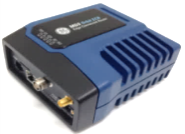
The MDS™ Orbit ECR is factory configured with various Network Interface Cards (NICs), based on order selection. The label on the bottom of the unit identifies the radio model as GE MDS ECR. It includes the device serial number and agency/regulatory identifications, including IDs for applicable embedded modules. Orbit ECR devices with specific network interfaces may be referred to with the common names below:
Depending on NIC configuration other marketing names may sometimes be used.
- ECR-4G — Name for the product when configured with 4G/LTE
- ECR-900 — Name for the product when configured with unlicensed 900 MHz (FHSS and DTS).
- ECR-LN — Name for the product when configured with licensed narrowband QAM radios.
Depending on NIC configuration other marketing names may sometimes be used.
- MDS Orbit PowerNet refers to Orbit devices equipped with a wireline/power line communication interface.
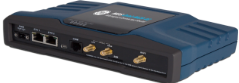
The MDS Orbit MCR is factory configured with various Network Interface Cards (NICs), based on order selection. The label on the bottom of the unit identifies the radio model as MDS MCR. It includes the device serial number and agency/regulatory identifications, including IDs for applicable embedded modules. Orbit MCR devices with specific network interfaces may be referred to with the common names below:
- MCR-4G — Name for the product when configured with 4G/LTE
- MCR-900 — Name for the product when configured with unlicensed 900 MHz (FHSS and DTS).
- MCR-LN — Name for the product when configured with licensed narrowband QAM radios.
How can we help you?
Type the keywords in the form
and we will find it for you.